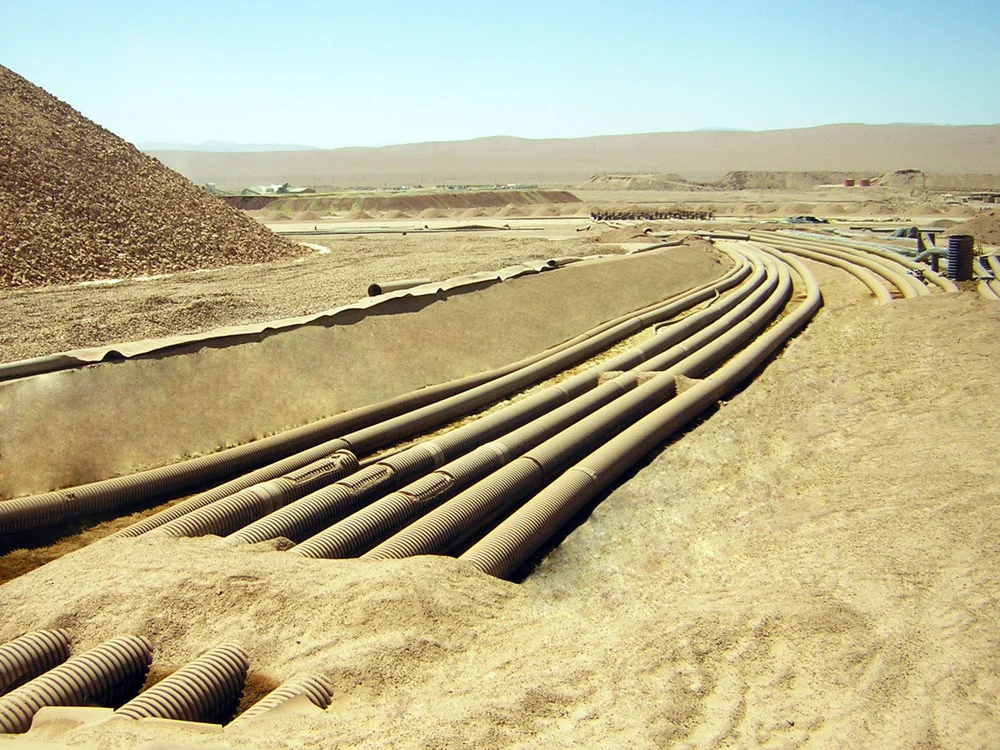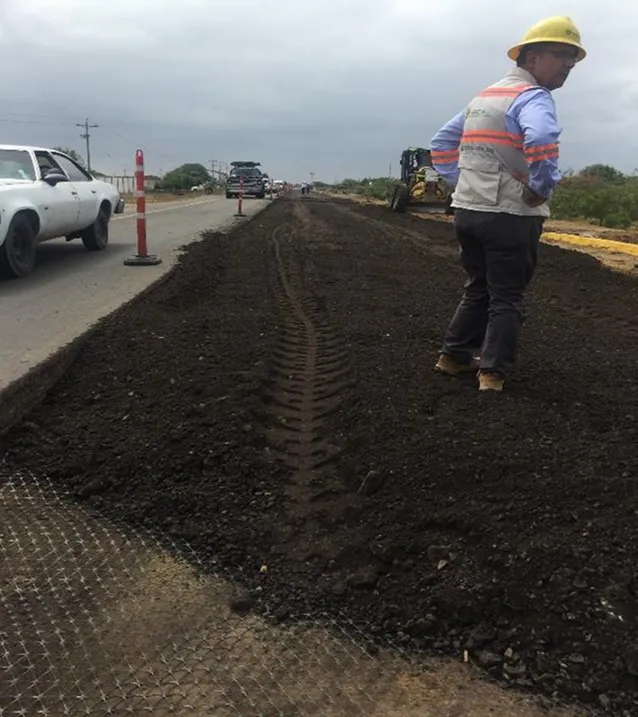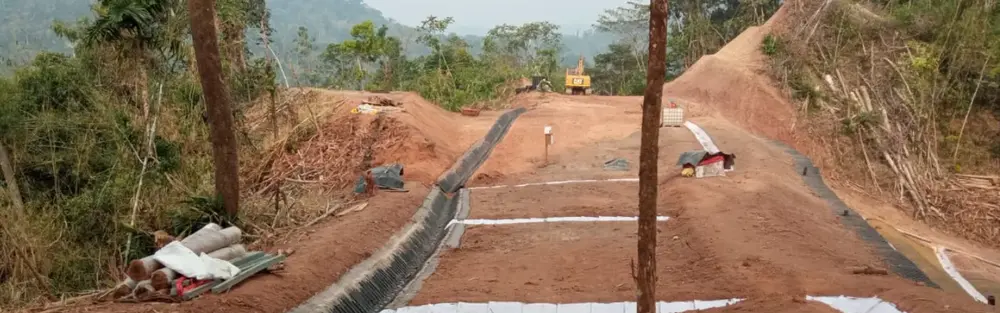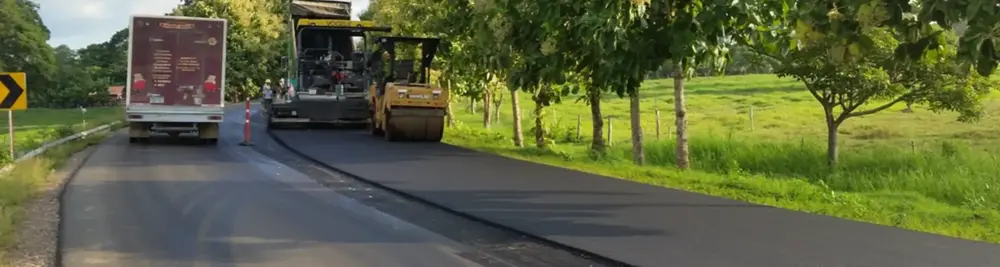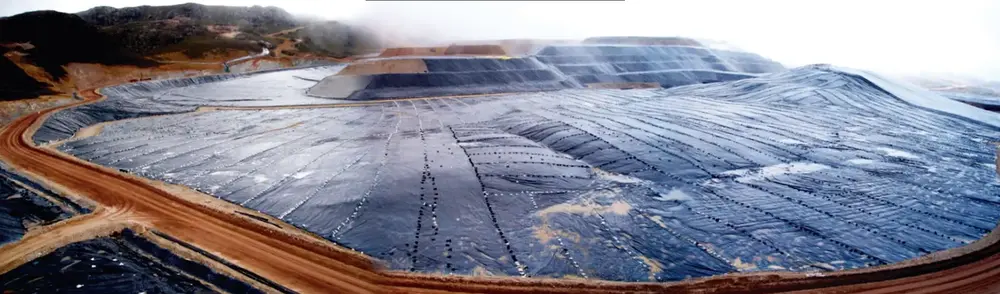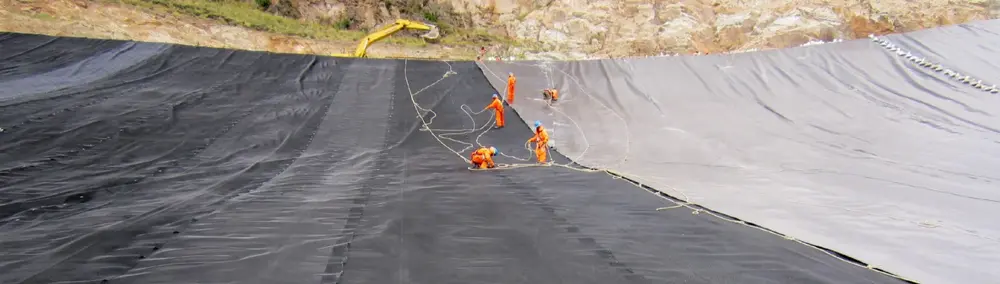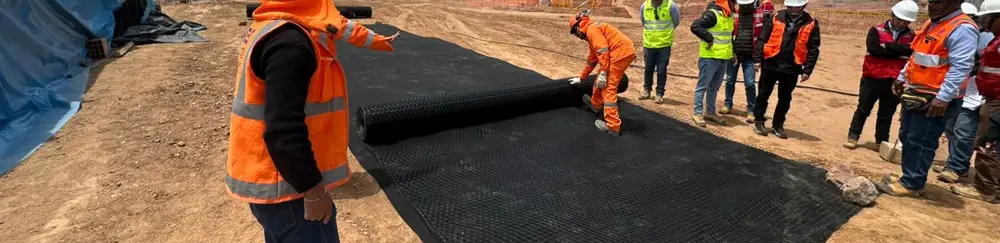
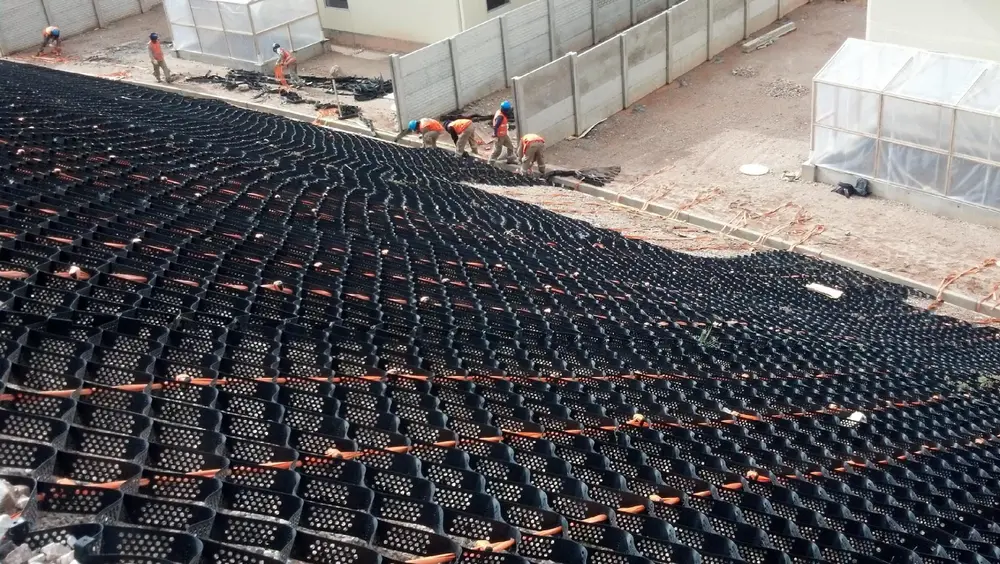




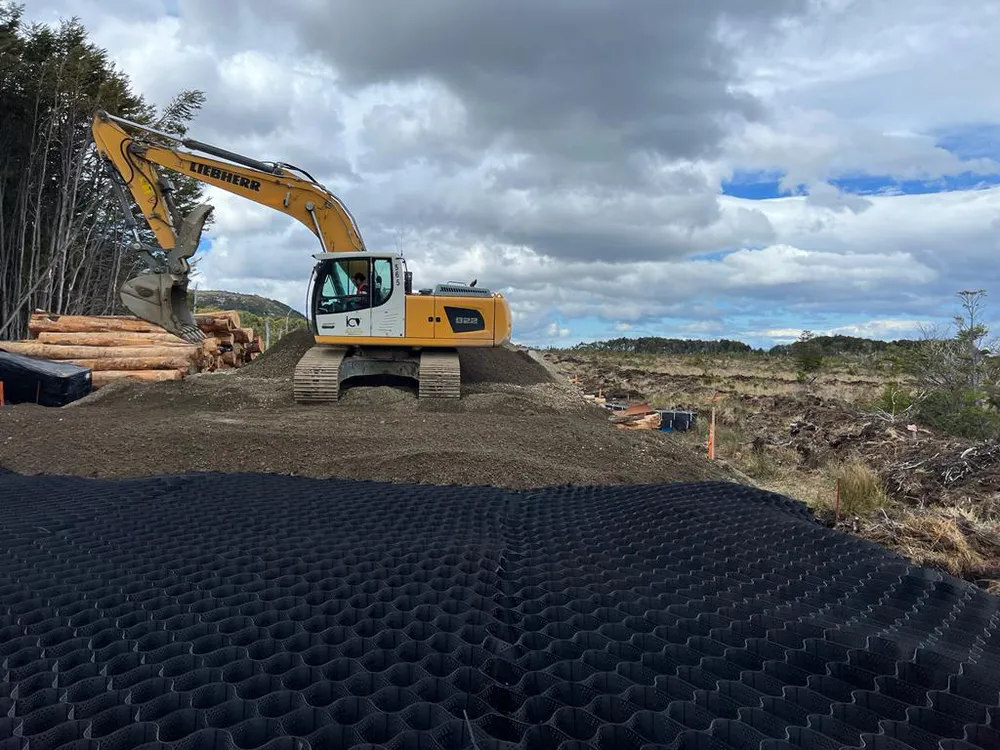
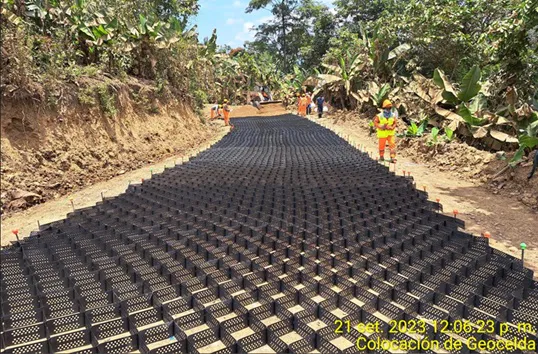
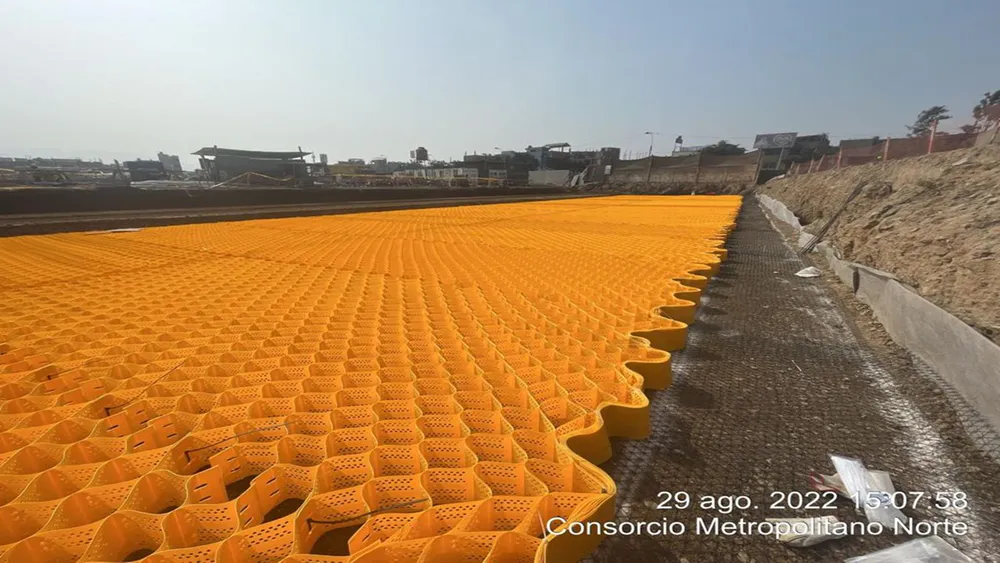
The construction of a new highway faced complex geotechnical conditions as it was built on peaty soils. This situation represented a significant risk to the road’s stability and the infrastructure’s durability in the medium and long term.
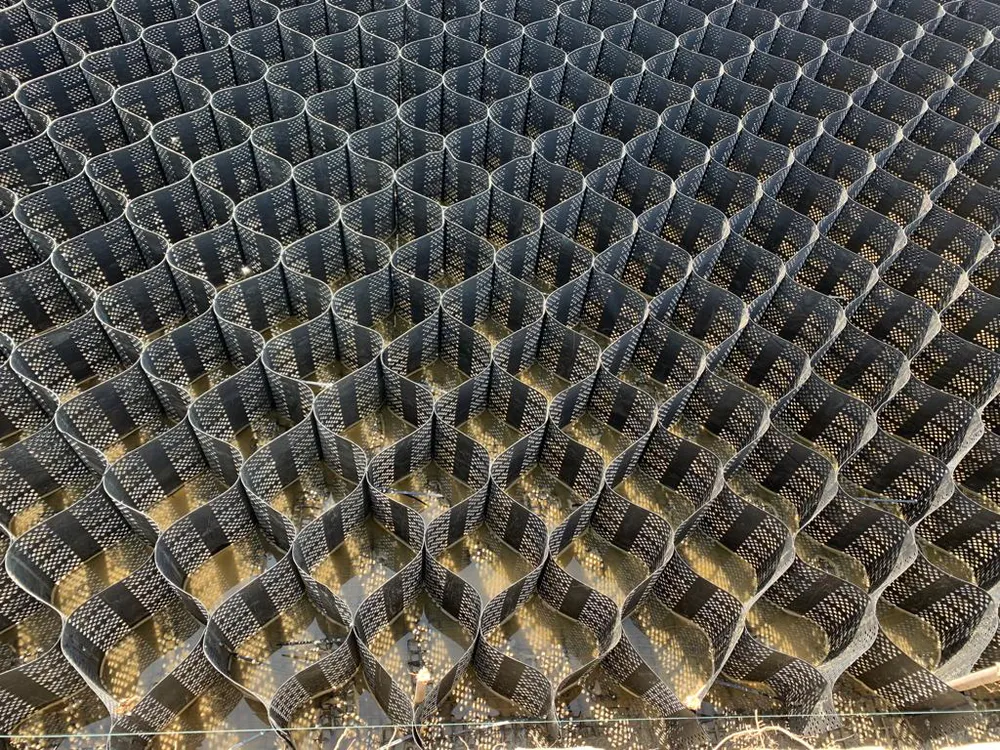
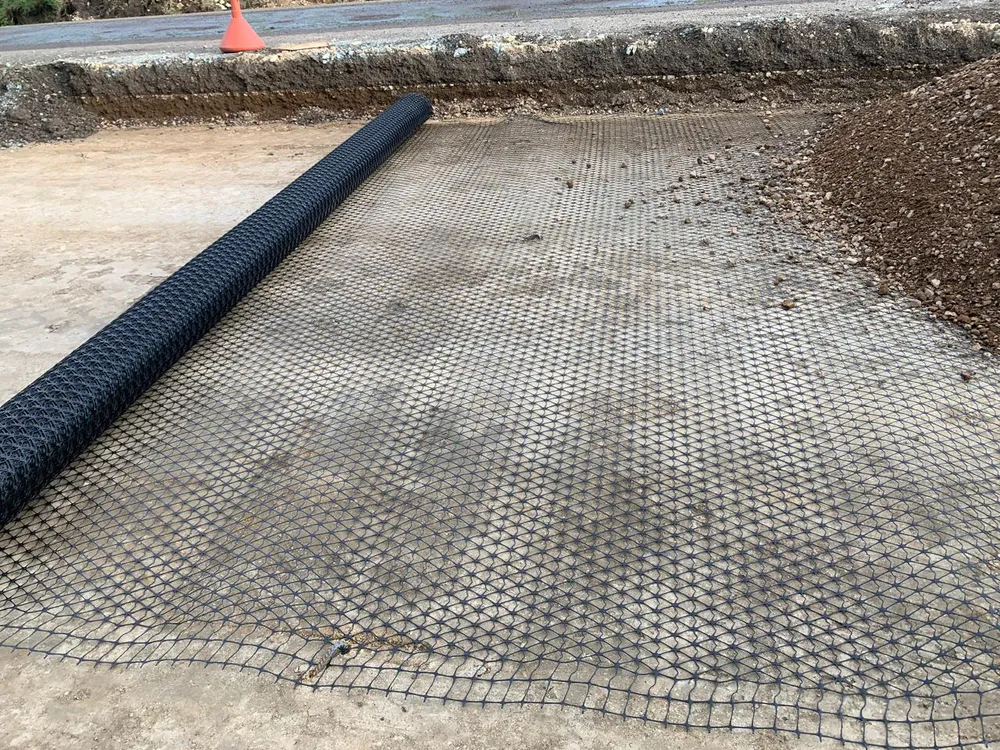
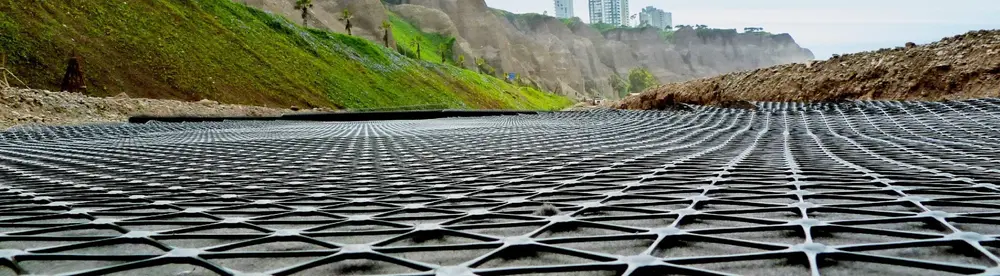
To mitigate these limitations, a reinforcement system composed of granular drainage material combined with geosynthetics was implemented, integrating a nonwoven geotextile, a geogrid, and an HDPE geocell. This solution allowed for efficient load distribution, improved drainage, and increased the ground’s load-bearing capacity, optimizing the highway’s structural performance from the construction stage.
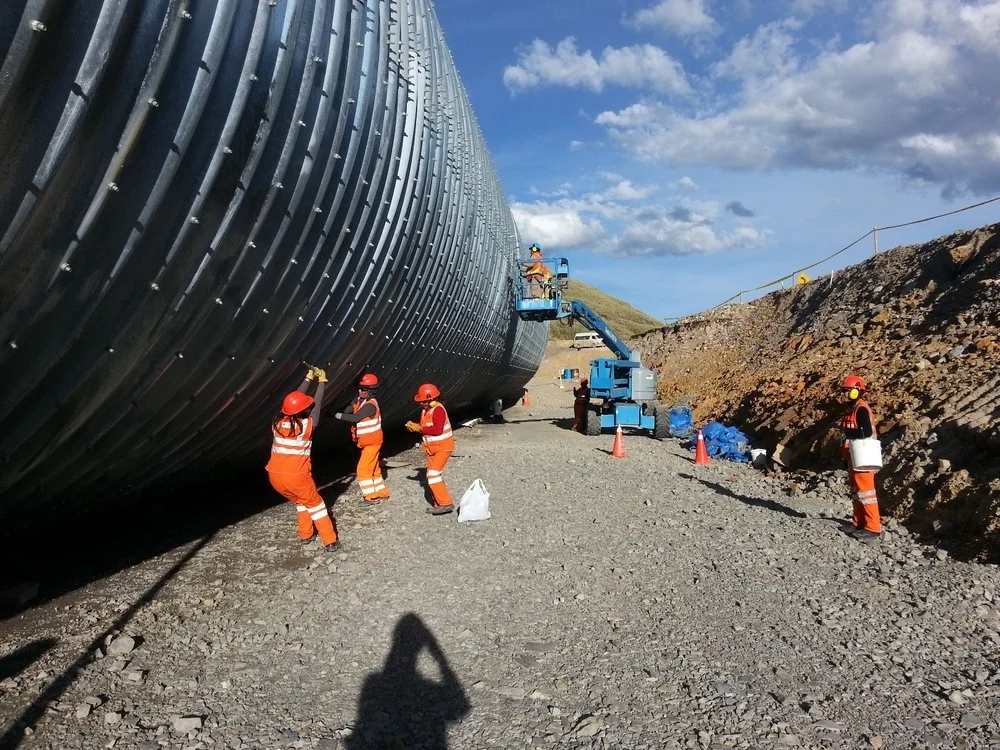
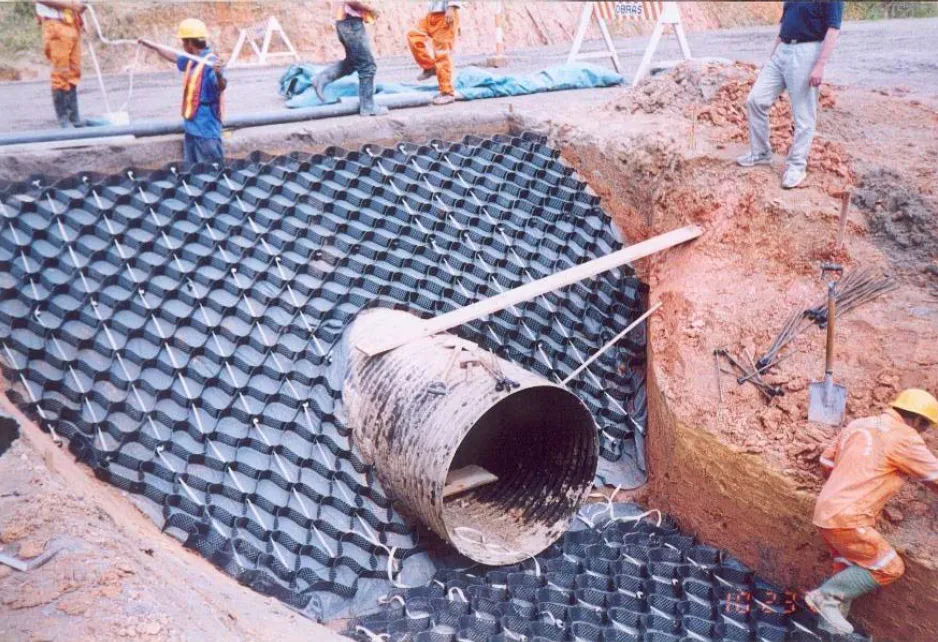
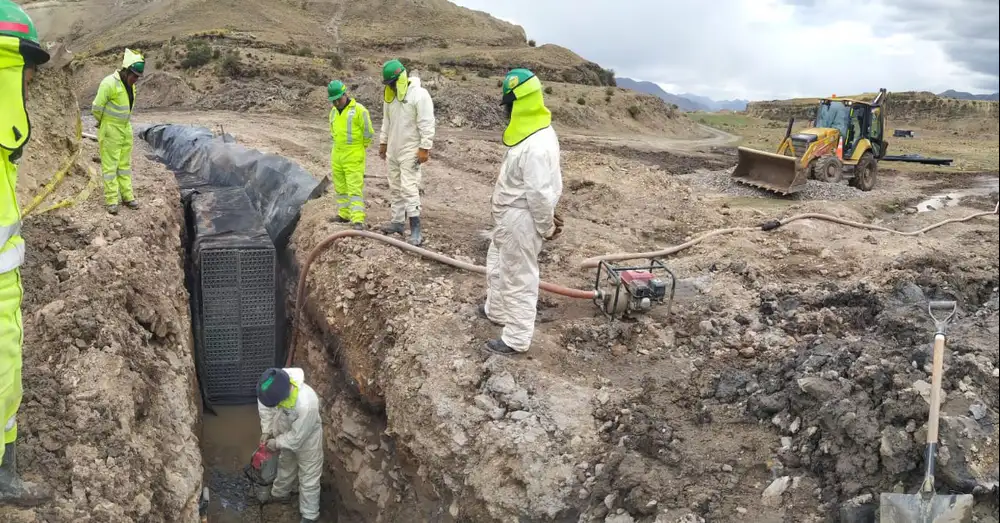
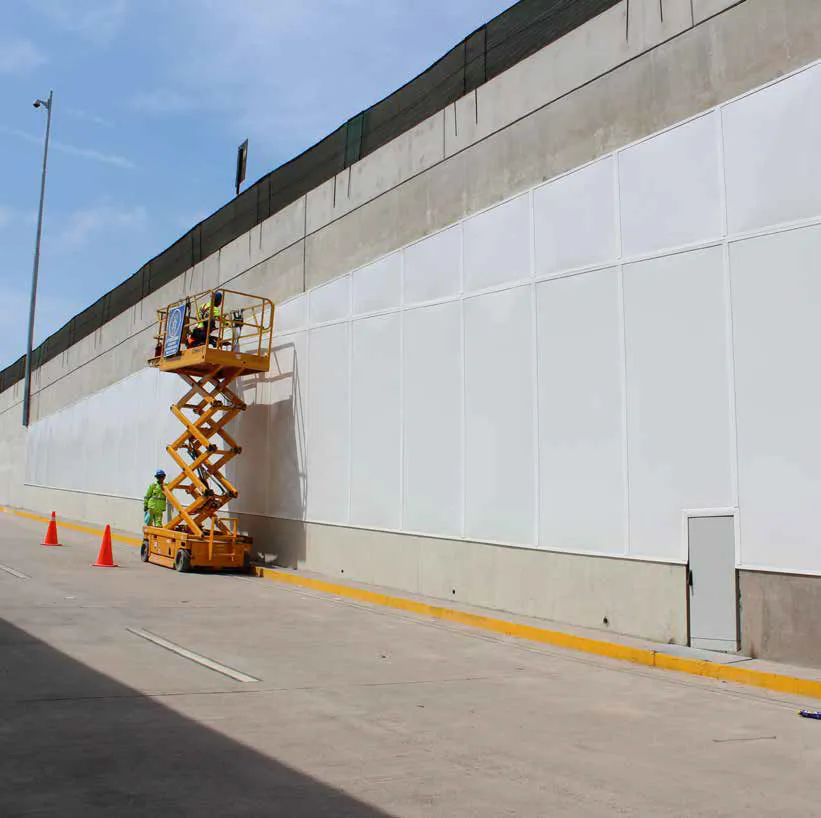
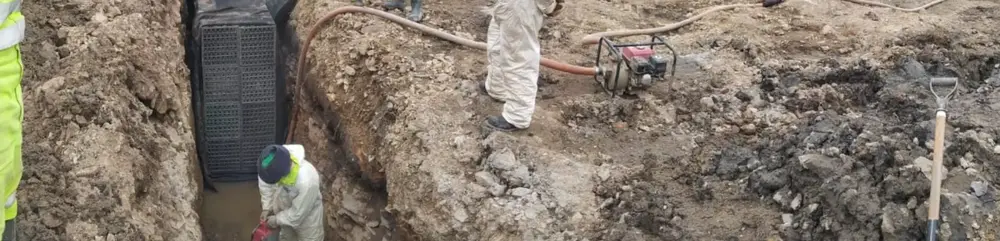
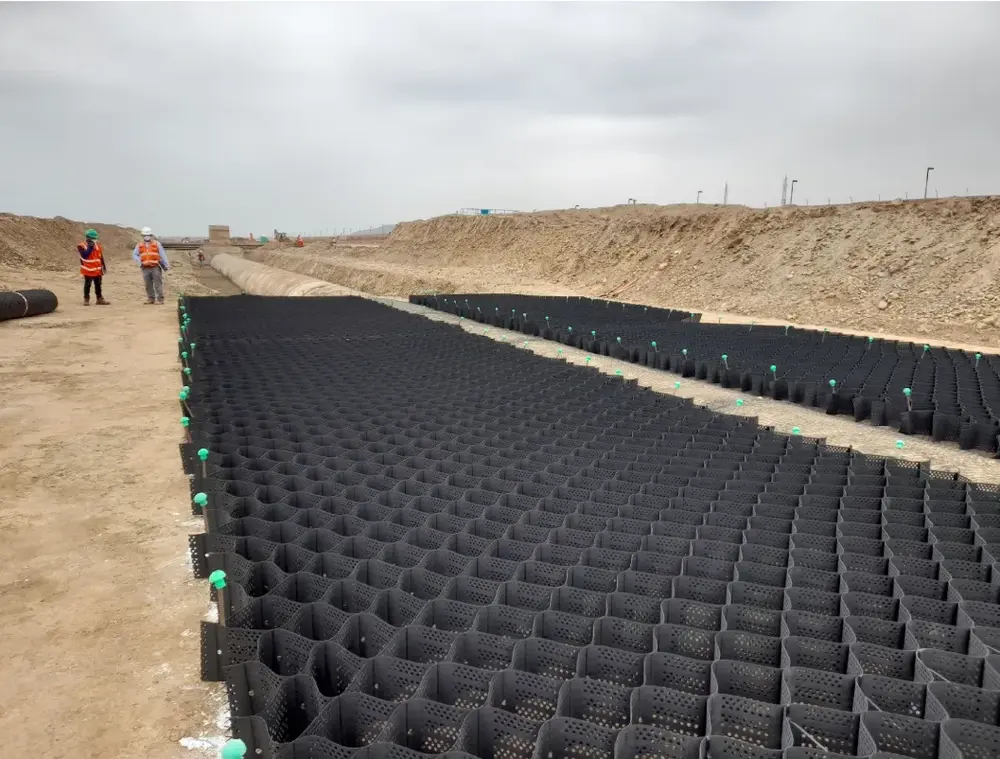
At Jorge Chávez International Airport (Callao, Peru), the existing collector, consisting of large-diameter rigid concrete pipes, presented a high risk of cracking due to the dynamic loads of the projected aircraft.
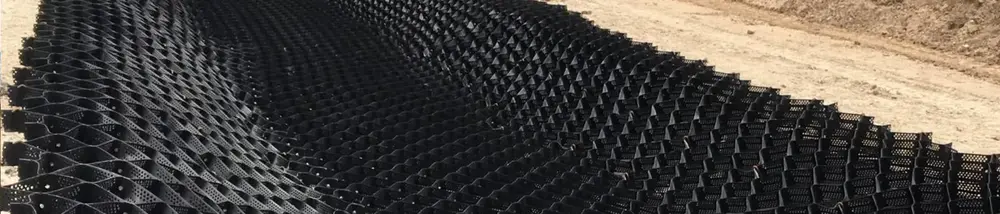
As a technical solution, a rigid pipe protection system was constructed with a geosynthetic reinforcement system consisting of multiaxial rigid geogrids and perforated and extruded HDPE geocells. This configuration allowed for the absorption and redistribution of dynamic loads, reducing concentrated stresses on the pipe and ensuring its long-term stability in the face of the airport’s operational demands.
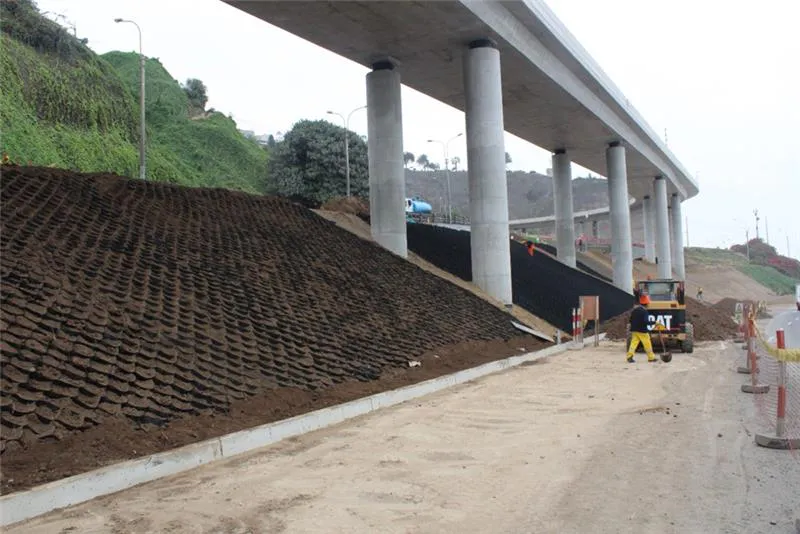
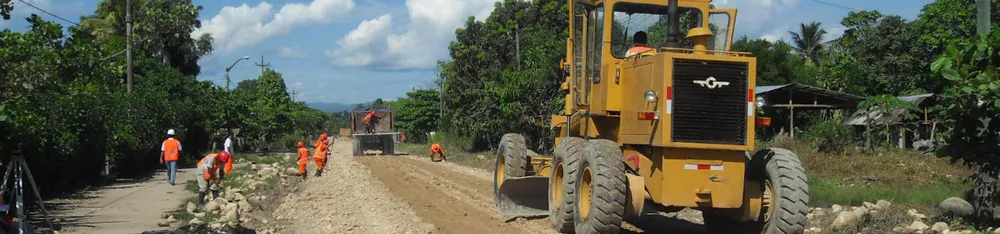
The paved roadway had low load-bearing capacity soils that limited its structural performance and required efficient subgrade improvement to ensure its functionality and durability.
Conventional solutions involved the use of large volumes of material, which increased costs and construction times.
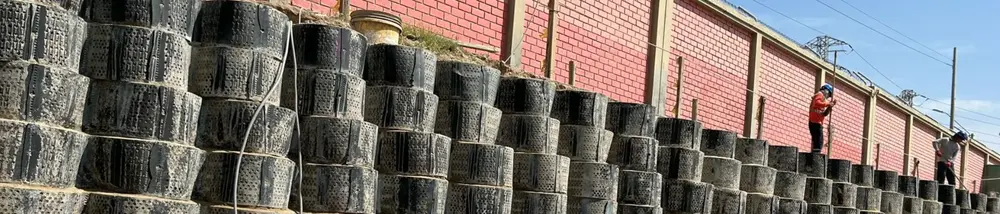
To address this condition, a geosynthetic-based solution was implemented using HDPE geocells, significantly reducing the required improvement thicknesses and achieving an optimal balance between technical performance and construction efficiency.
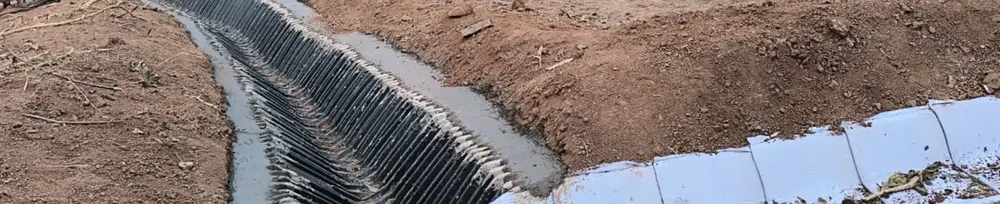
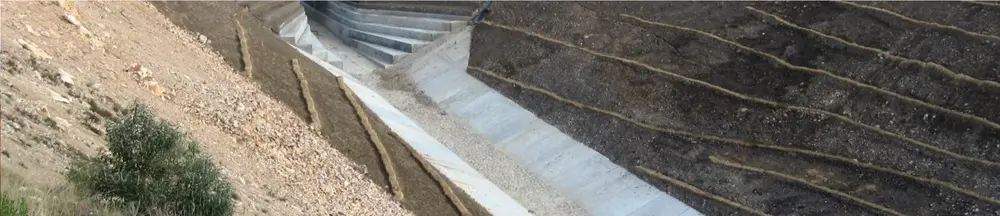
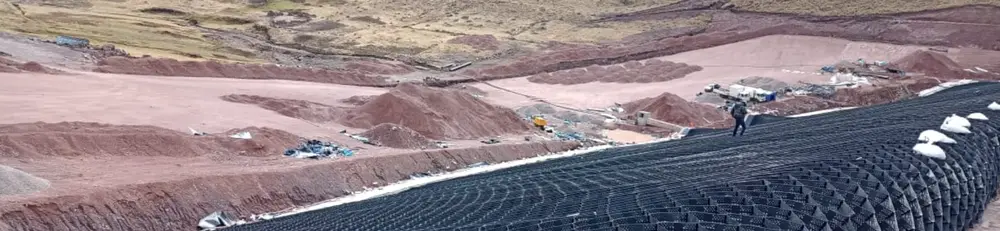
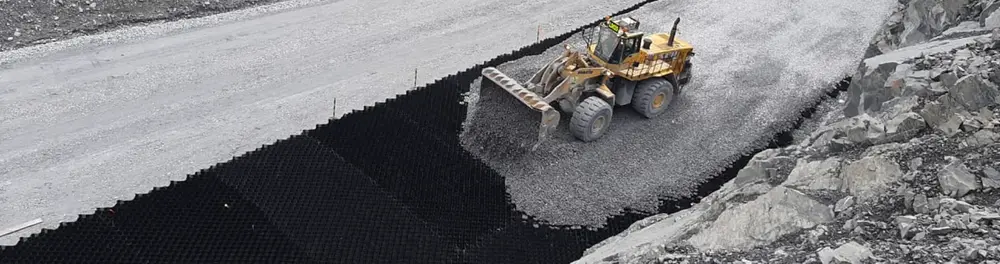
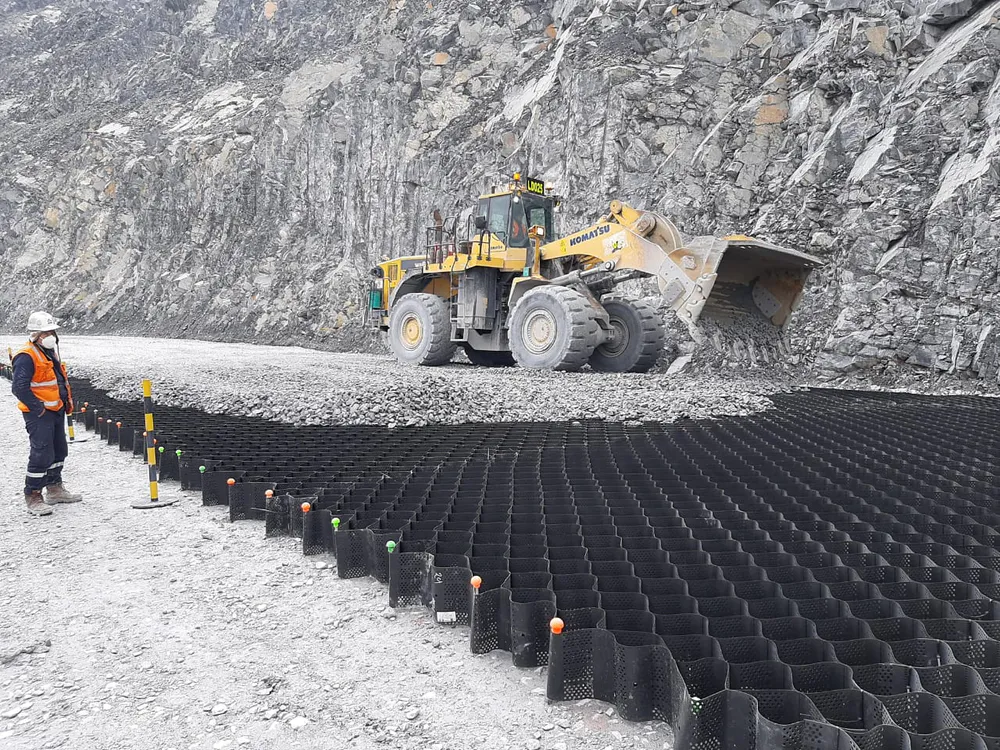
The existing mining road exhibited high levels of deformability due to poor surface drainage, resulting in poor serviceability. This condition directly affected the daily performance of earthmoving operations, increasing operating costs and reducing project efficiency.
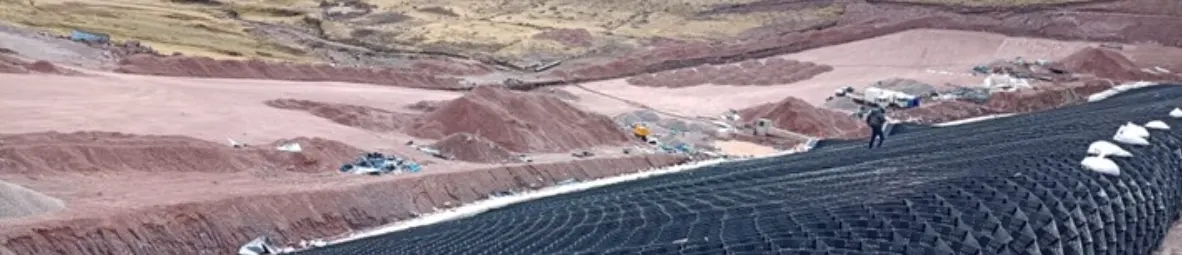
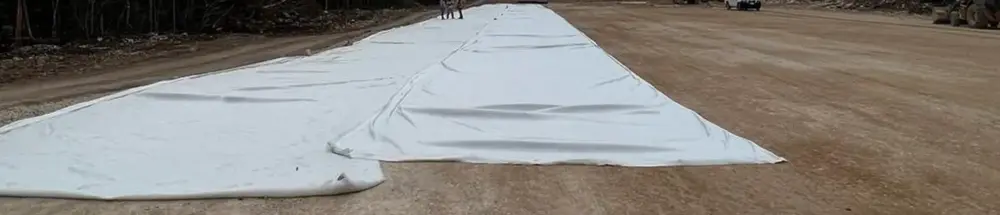
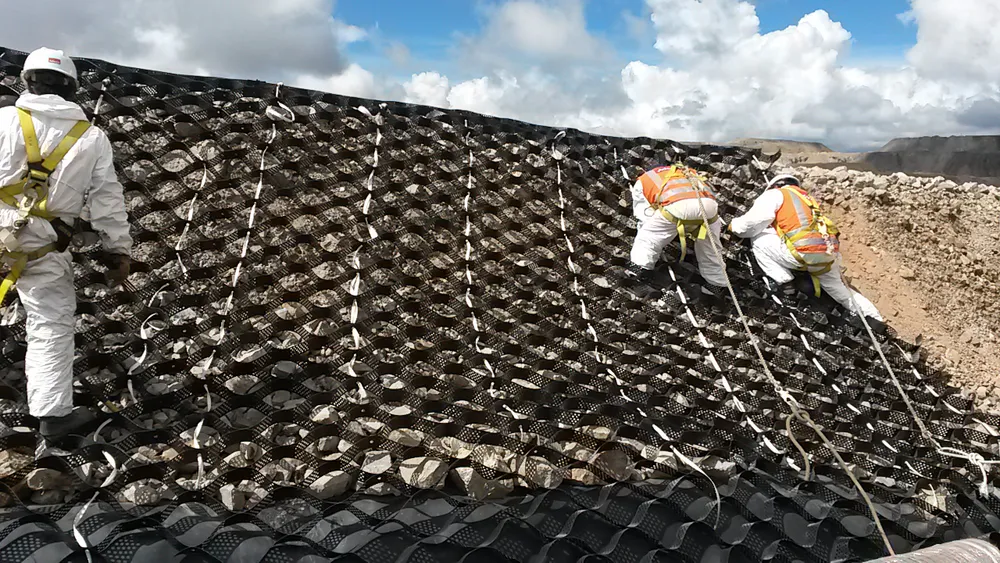
To stabilize the road and restore its functionality, a reinforcement system composed of granular drainage material combined with geosynthetics, using nonwoven geotextile and HDPE geocells, was implemented. This solution improved load-bearing capacity, facilitated drainage, and controlled deformation, ensuring a more stable, safe, and efficient road for mining operations.
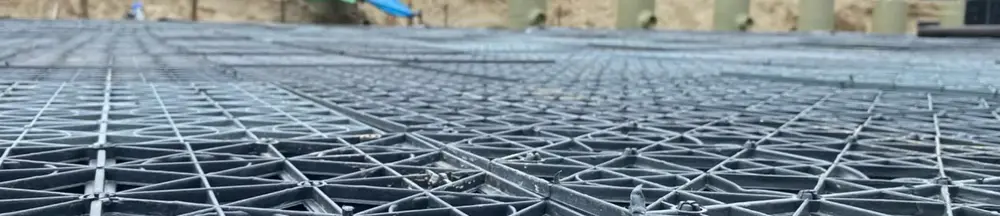
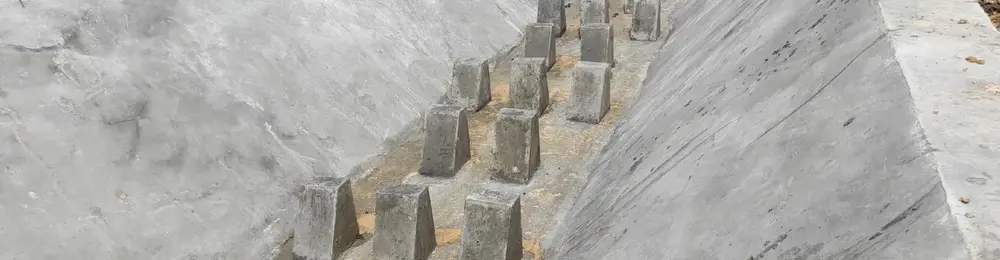
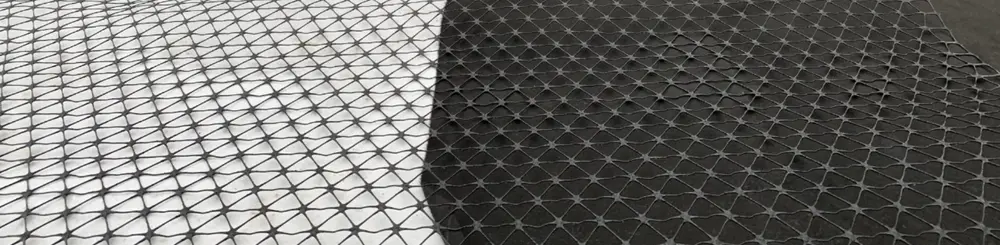
The project presented unfavorable geotechnical conditions: foundation soils comprised of anthropogenic fills with a high probability of uncontrollable settlement and low shear strength. These characteristics compromised structural stability and represented a critical risk to the safe development of the project.
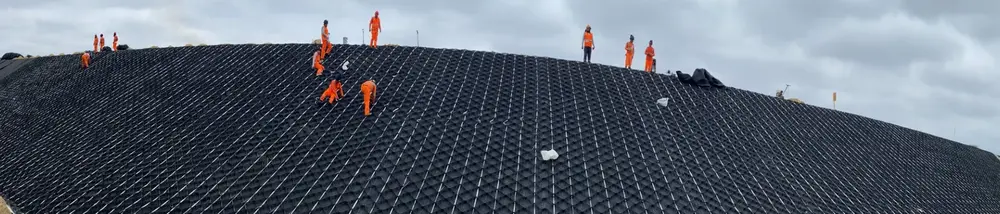
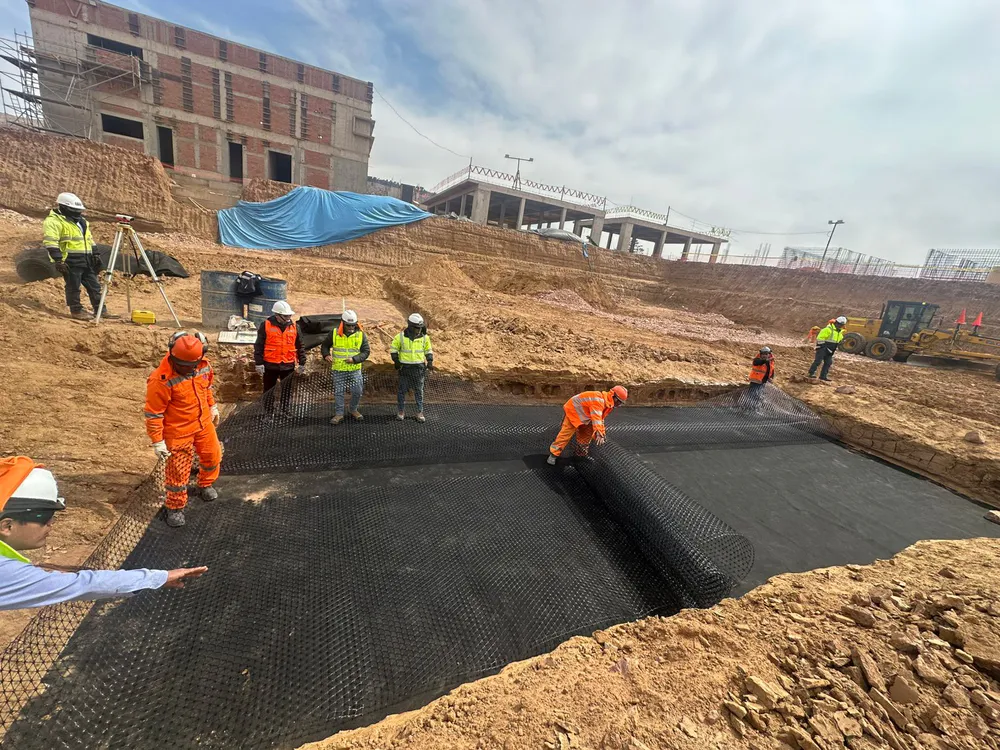
Therefore, as a technical solution, a reinforced working platform was built using geosynthetic systems, integrating multiaxial extruded rigid geogrids in combination with high-performance HDPE geocells. This configuration significantly improved load distribution and controlled settlements, ensuring optimal conditions for project execution.
The construction of a new highway faced complex geotechnical conditions as it was built on peaty soils. This situation represented a significant risk to the road’s stability and the infrastructure’s durability in the medium and long term.
To mitigate these limitations, a reinforcement system composed of granular drainage material combined with geosynthetics was implemented, integrating a nonwoven geotextile, a geogrid, and an HDPE geocell. This solution allowed for efficient load distribution, improved drainage, and increased the ground’s load-bearing capacity, optimizing the highway’s structural performance from the construction stage.
At Jorge Chávez International Airport (Callao, Peru), the existing collector, consisting of large-diameter rigid concrete pipes, presented a high risk of cracking due to the dynamic loads of the projected aircraft.
As a technical solution, a rigid pipe protection system was constructed with a geosynthetic reinforcement system consisting of multiaxial rigid geogrids and perforated and extruded HDPE geocells. This configuration allowed for the absorption and redistribution of dynamic loads, reducing concentrated stresses on the pipe and ensuring its long-term stability in the face of the airport’s operational demands.
The paved roadway had low load-bearing capacity soils that limited its structural performance and required efficient subgrade improvement to ensure its functionality and durability.
Conventional solutions involved the use of large volumes of material, which increased costs and construction times.
To address this condition, a geosynthetic-based solution was implemented using HDPE geocells, significantly reducing the required improvement thicknesses and achieving an optimal balance between technical performance and construction efficiency.
The existing mining road exhibited high levels of deformability due to poor surface drainage, resulting in poor serviceability. This condition directly affected the daily performance of earthmoving operations, increasing operating costs and reducing project efficiency.
To stabilize the road and restore its functionality, a reinforcement system composed of granular drainage material combined with geosynthetics, using nonwoven geotextile and HDPE geocells, was implemented. This solution improved load-bearing capacity, facilitated drainage, and controlled deformation, ensuring a more stable, safe, and efficient road for mining operations.
The project presented unfavorable geotechnical conditions: foundation soils comprised of anthropogenic fills with a high probability of uncontrollable settlement and low shear strength. These characteristics compromised structural stability and represented a critical risk to the safe development of the project.
Therefore, as a technical solution, a reinforced working platform was built using geosynthetic systems, integrating multiaxial extruded rigid geogrids in combination with high-performance HDPE geocells. This configuration significantly improved load distribution and controlled settlements, ensuring optimal conditions for project execution.
Our team of experts is ready to advise you and help you find the best option for your project.