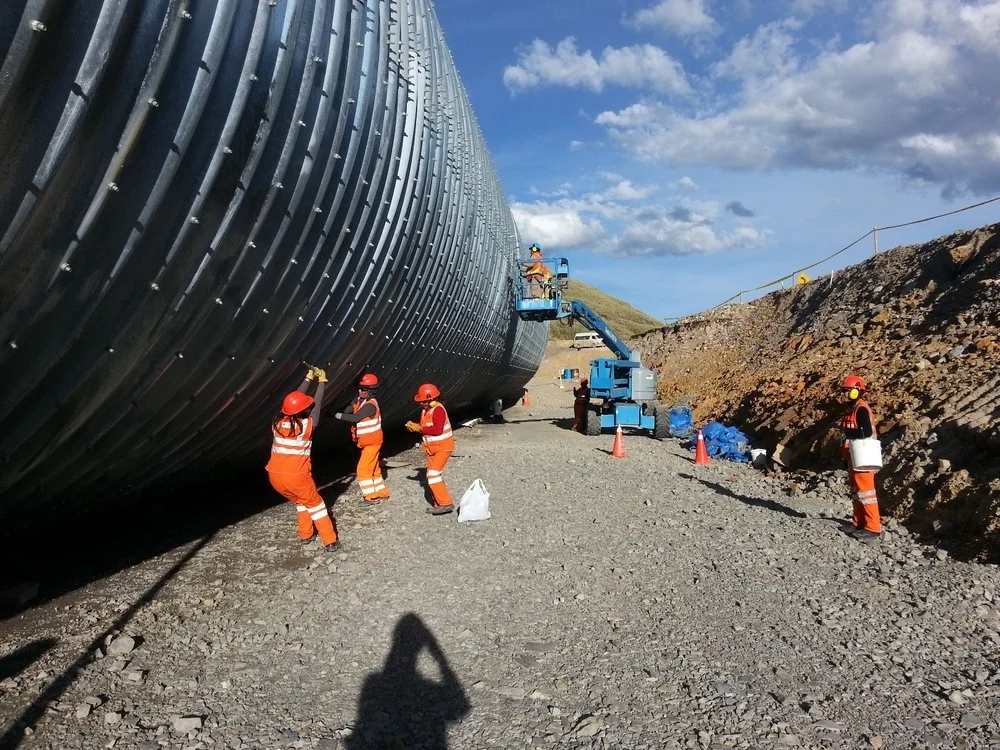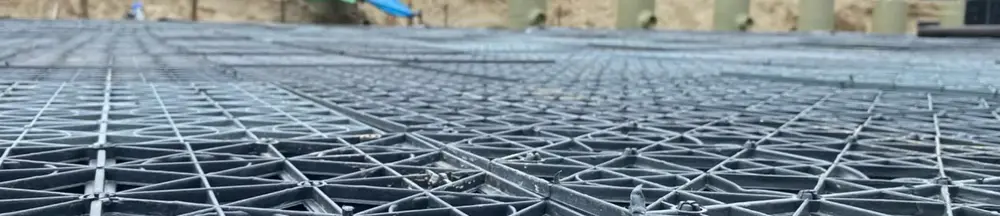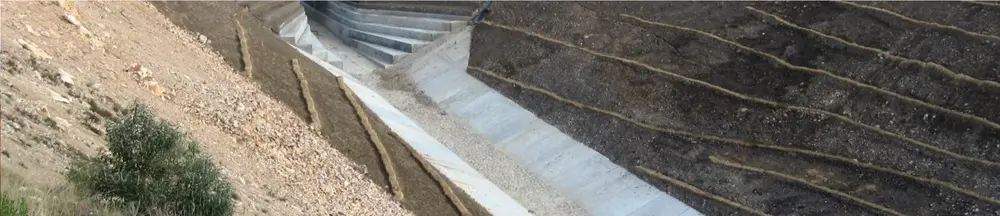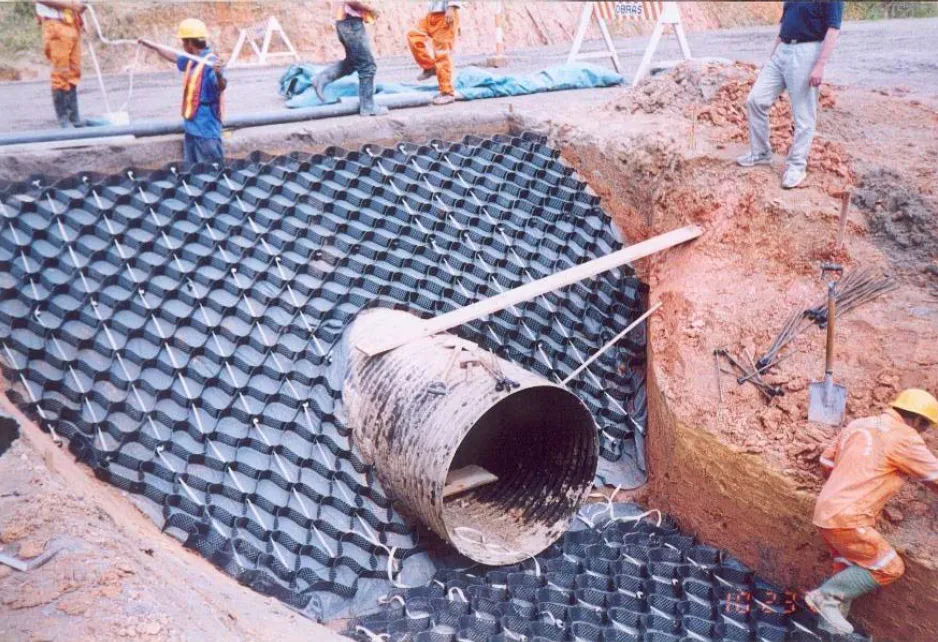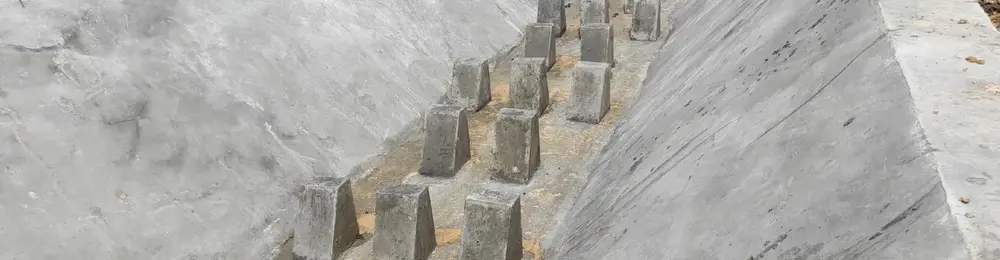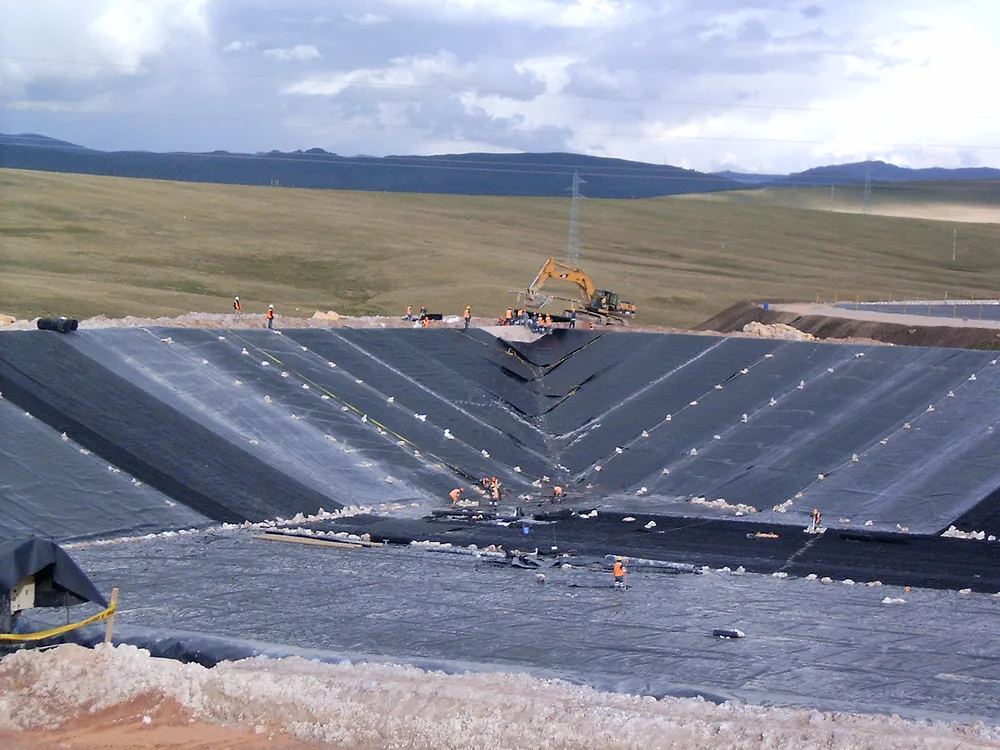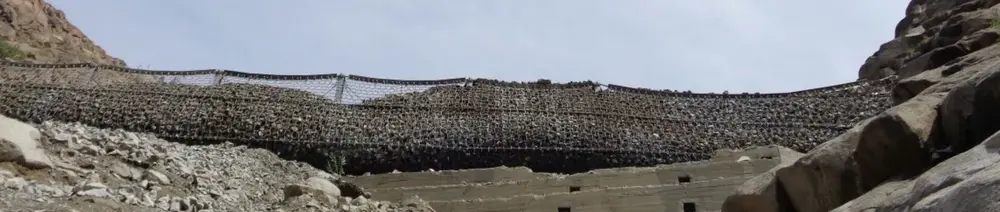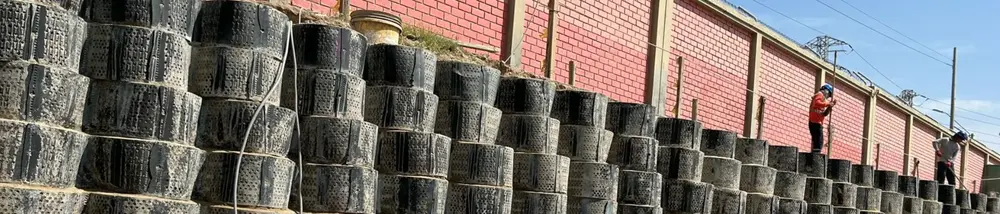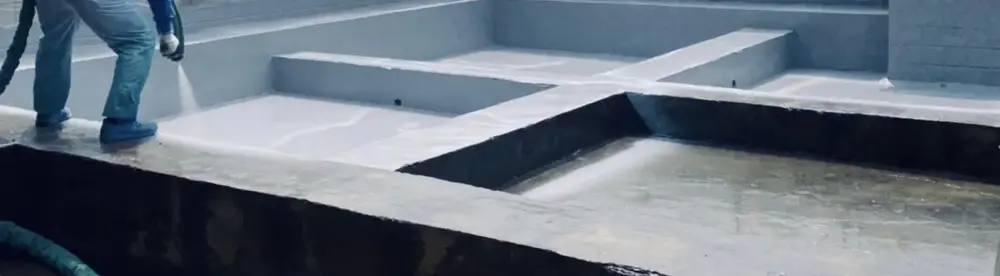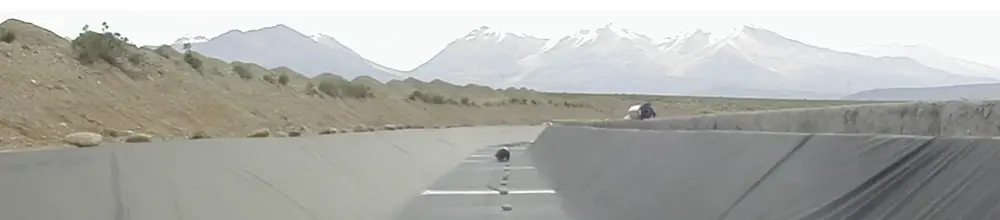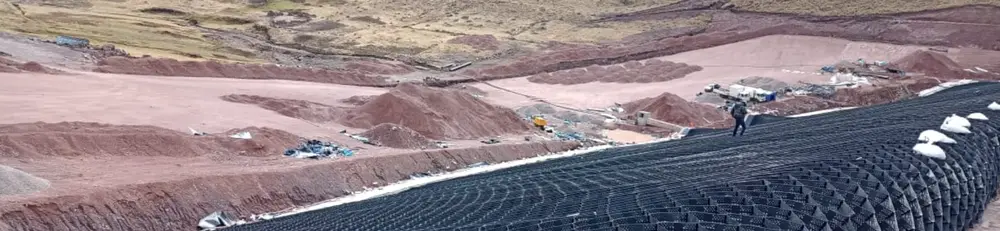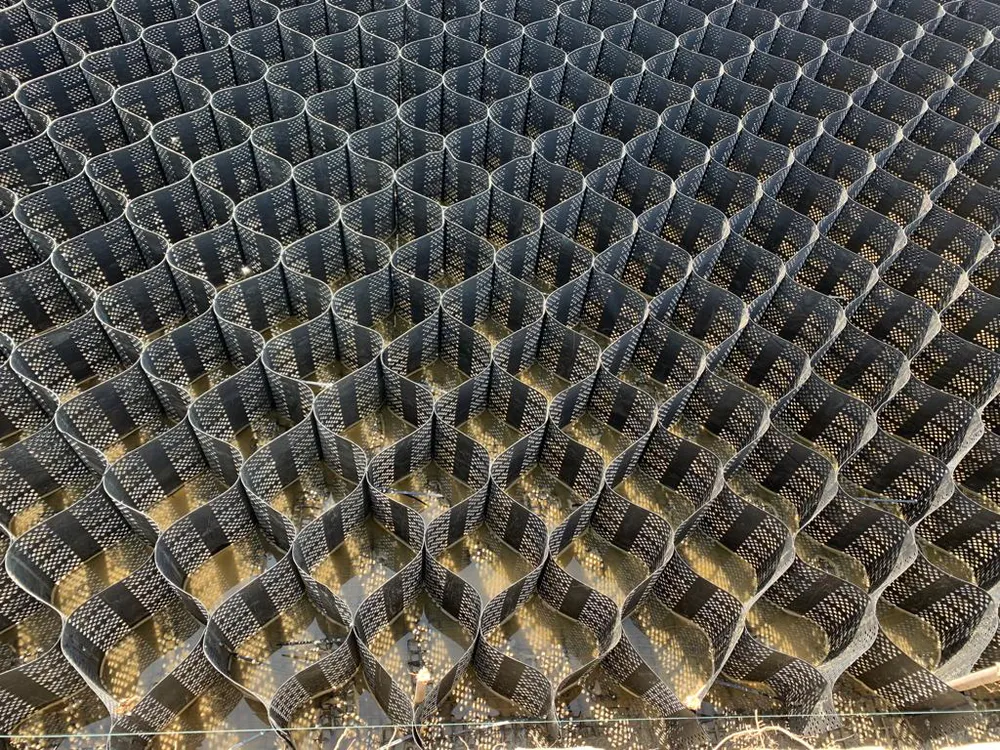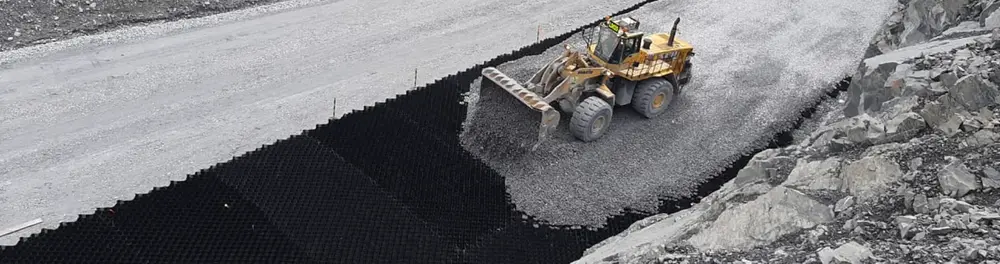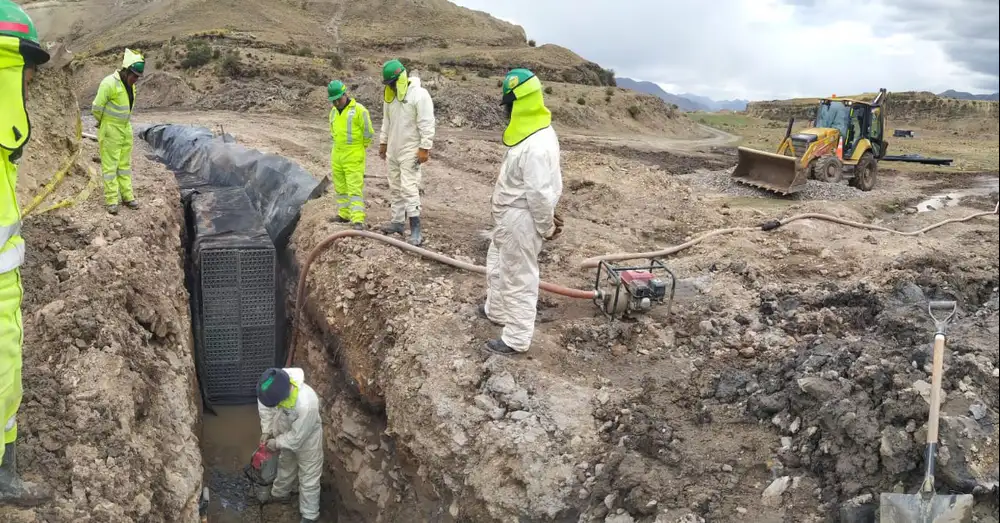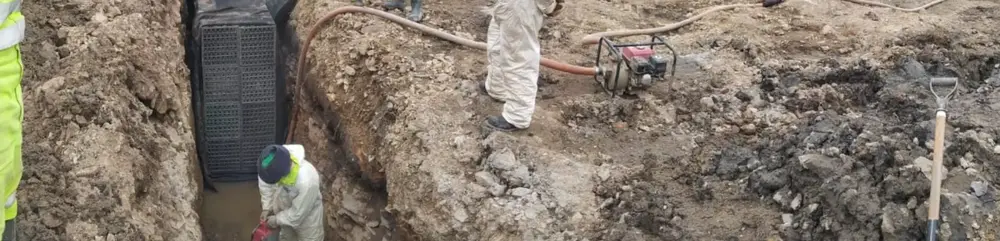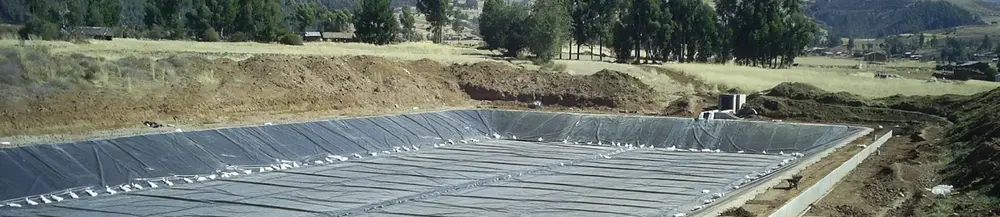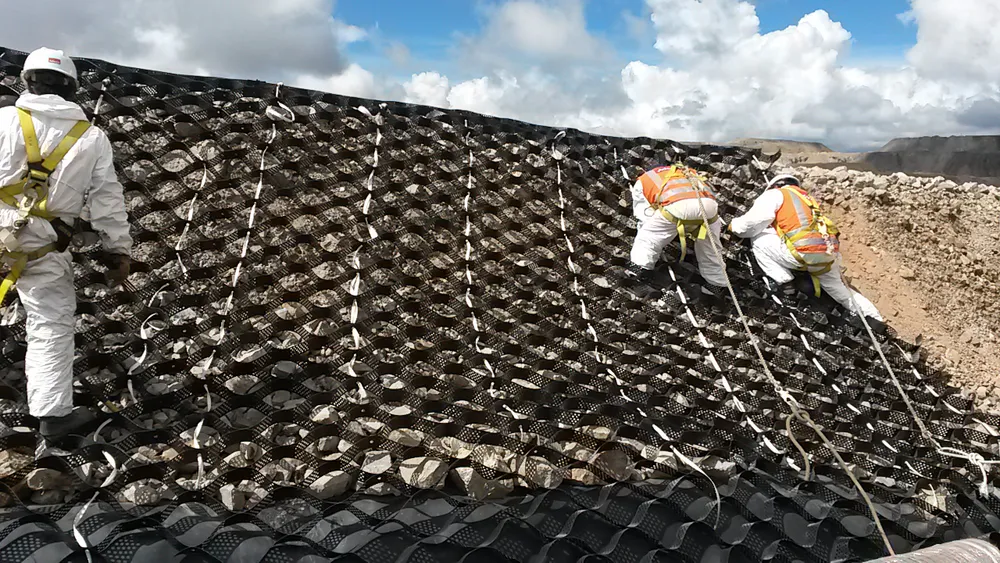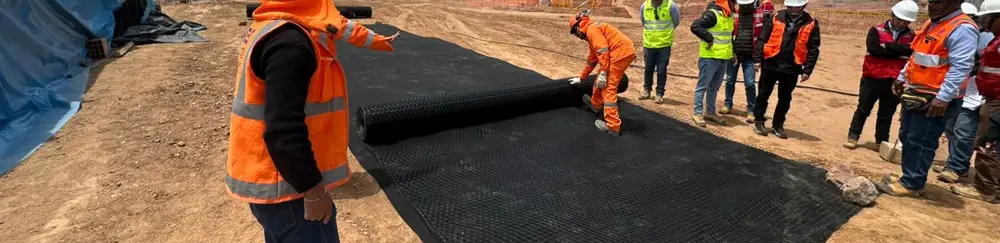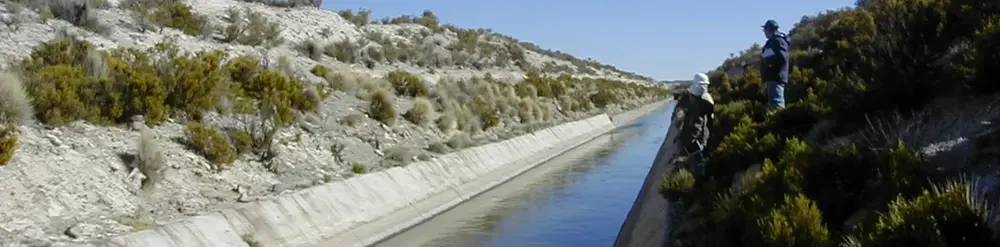
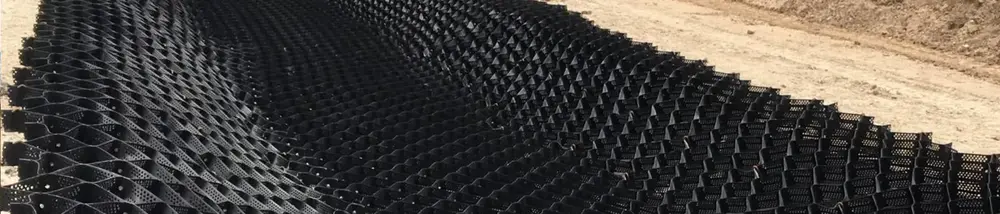
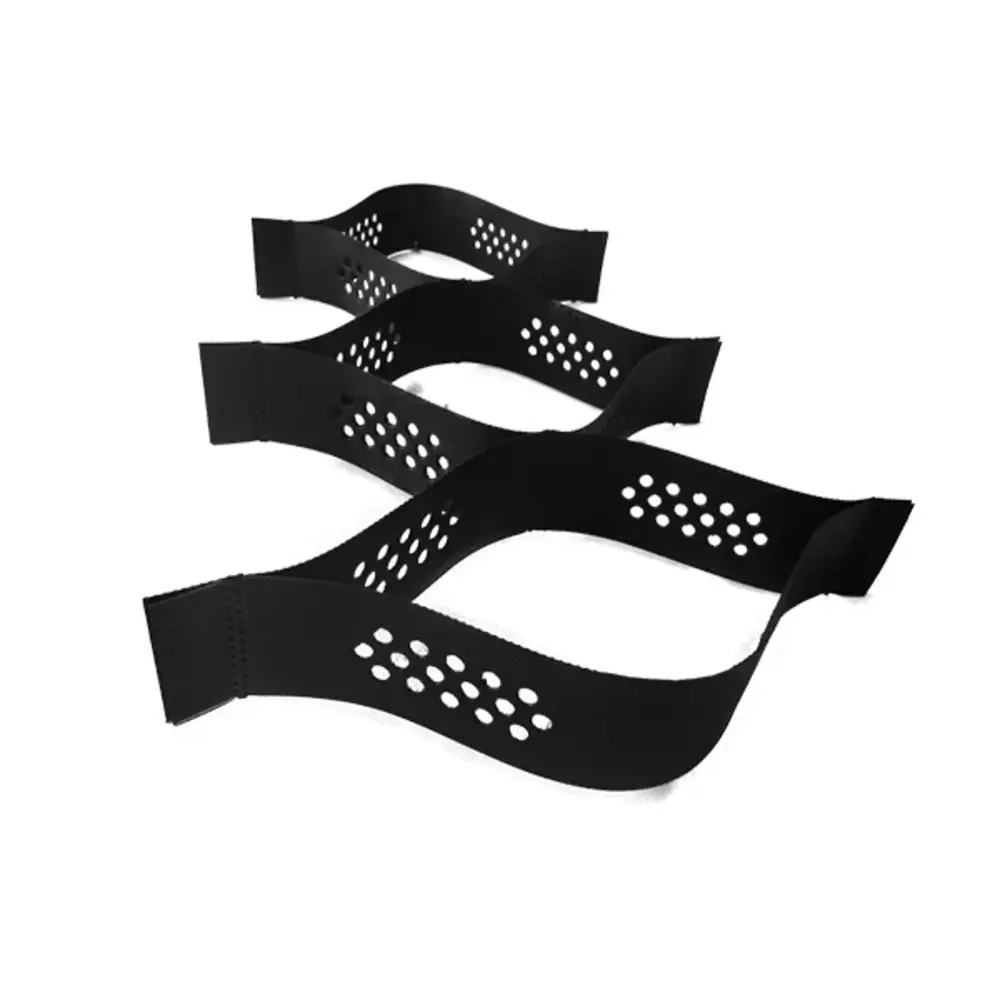


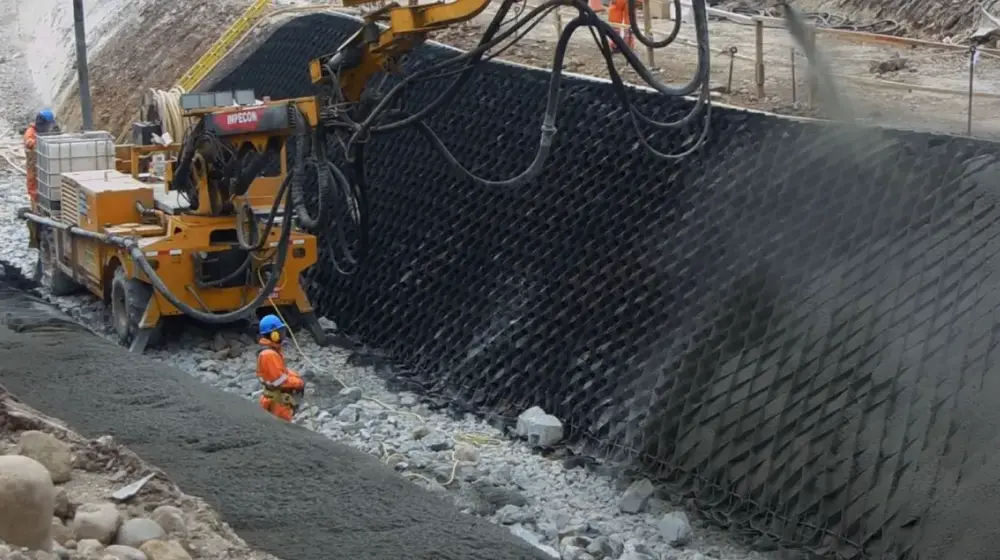
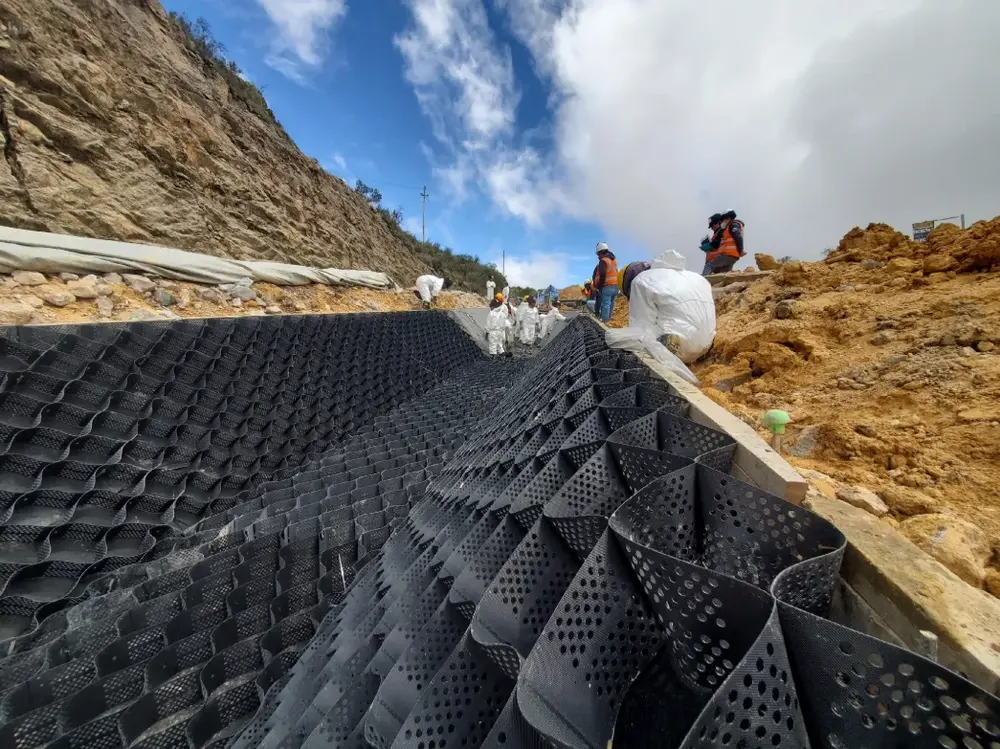
At the Las Bambas mining unit, located in the Apurímac region, the T6 canal was built as part of the project’s key hydraulic infrastructure. This structure, over 3 meters high and with a base over 5 meters long, was designed to convey a flow of approximately 80 m³/s. Its construction used 100 mm deep geocells on the slopes, filled with shotcrete, and 150 mm deep geocells at the base, reinforced with ready-mix concrete, ensuring a structurally stable solution resistant to high flow.
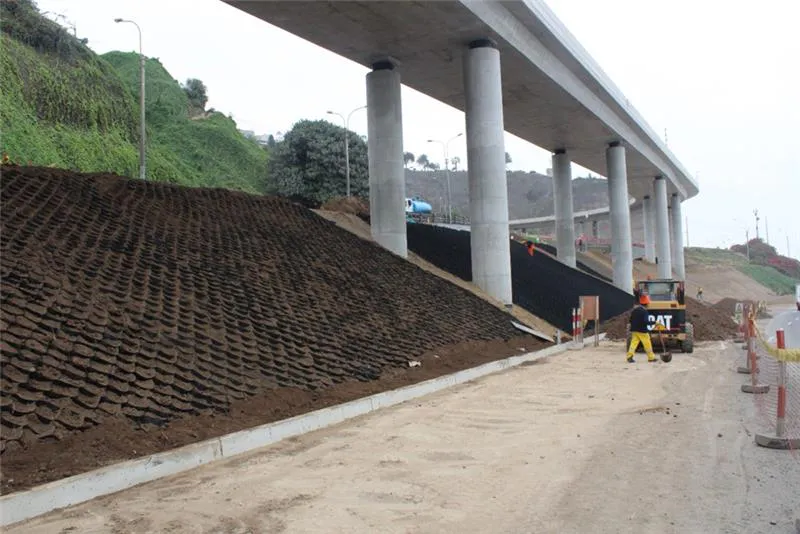
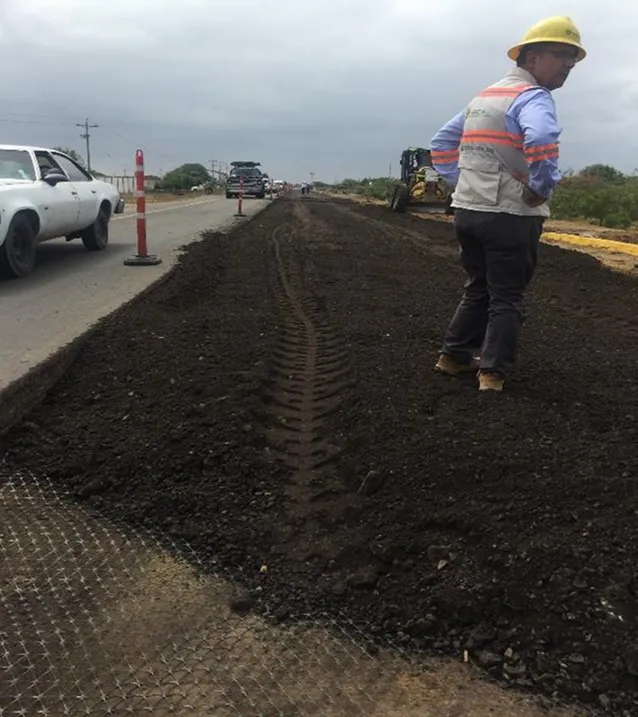
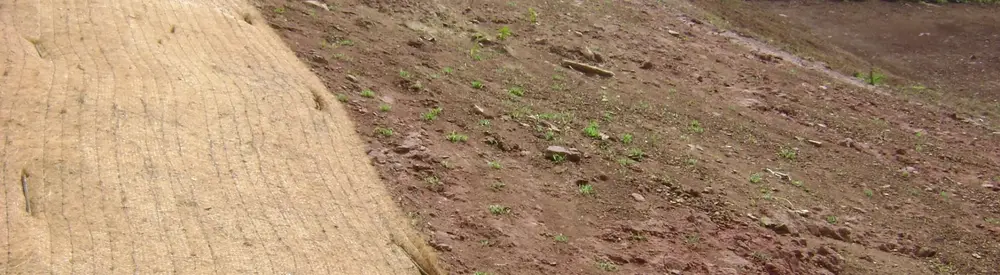
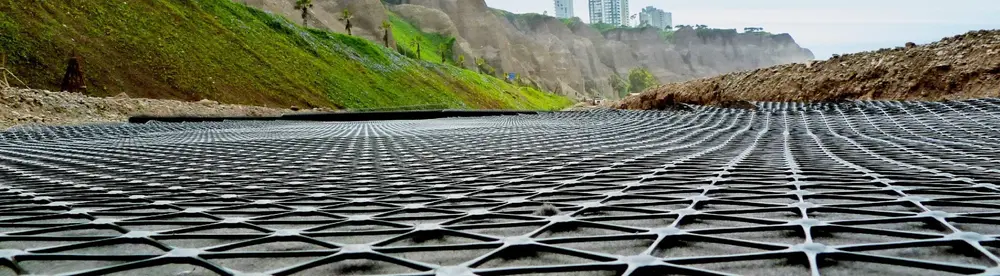
The use of geocells allowed for faster and more efficient installation than traditional solutions, while also offering flexibility to adapt to the terrain’s topography. This solution not only facilitates hydraulic control and flow containment, but also allows, in other applications, for the development of vegetation within the cells, promoting more sustainable and greener environments.
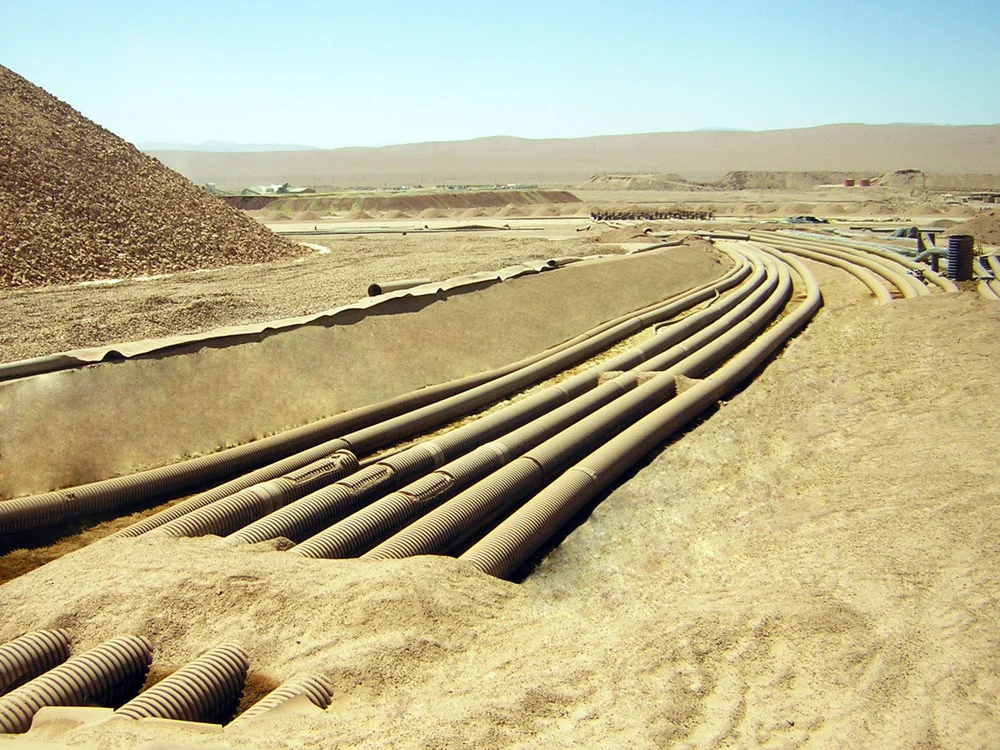
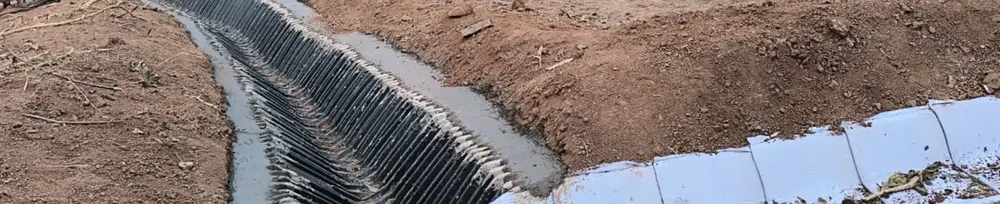
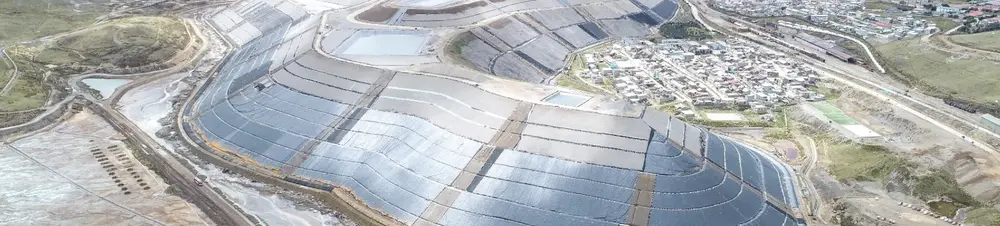
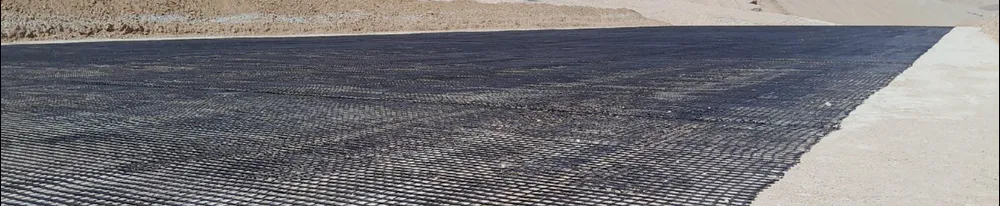
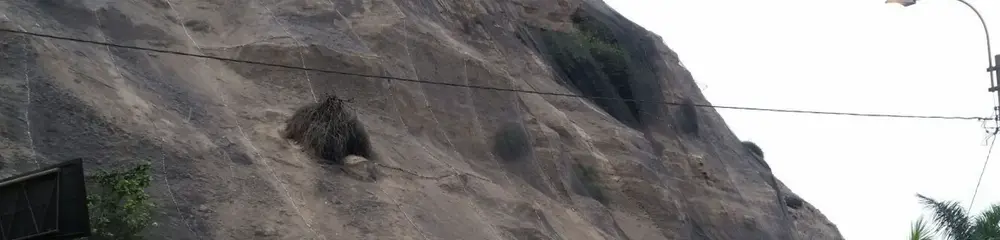
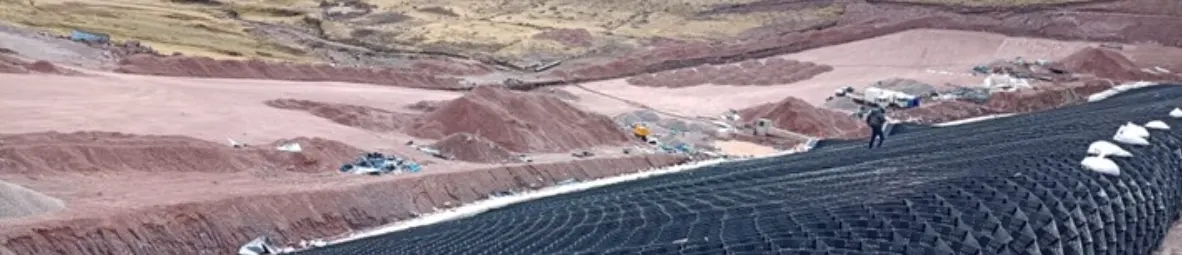
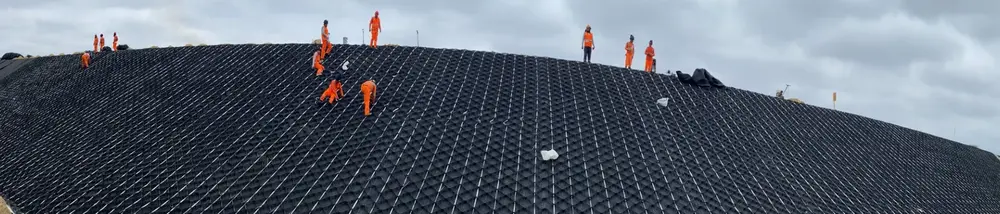
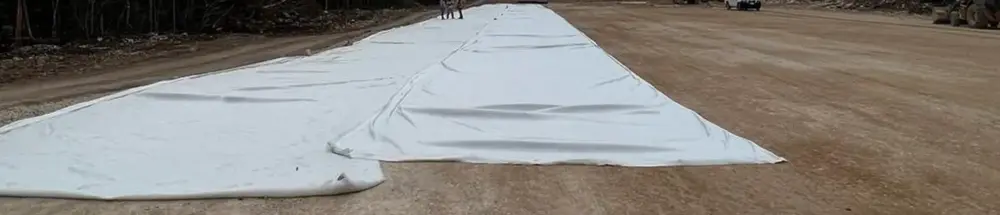
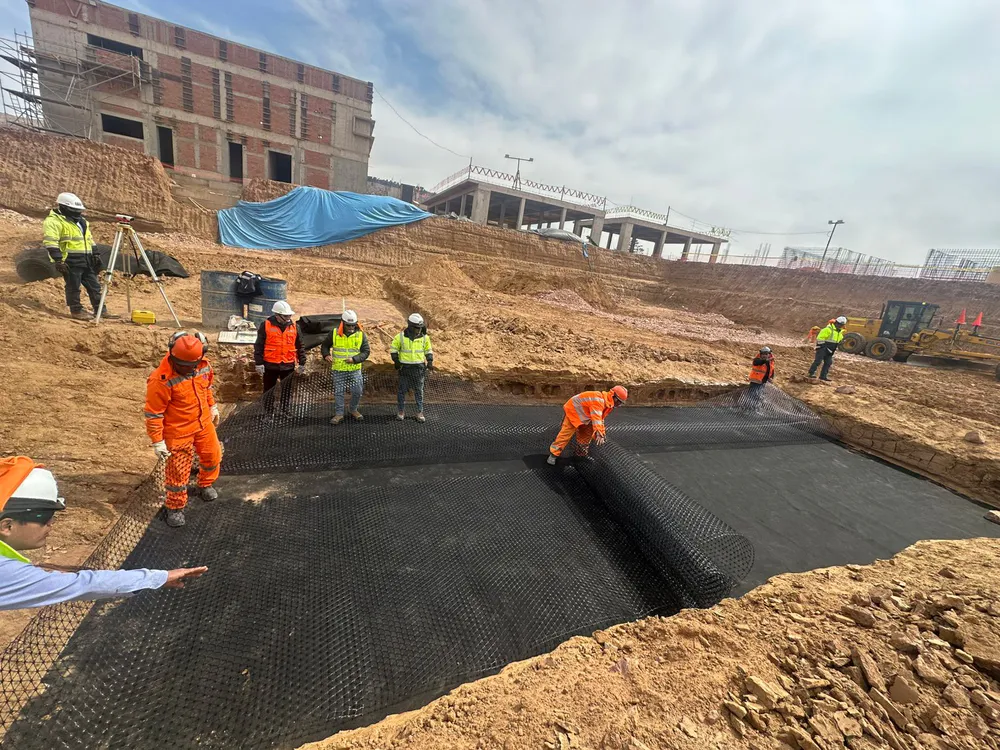
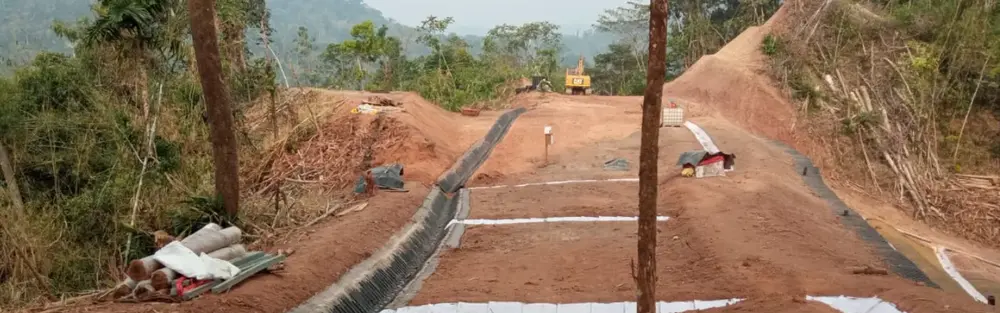
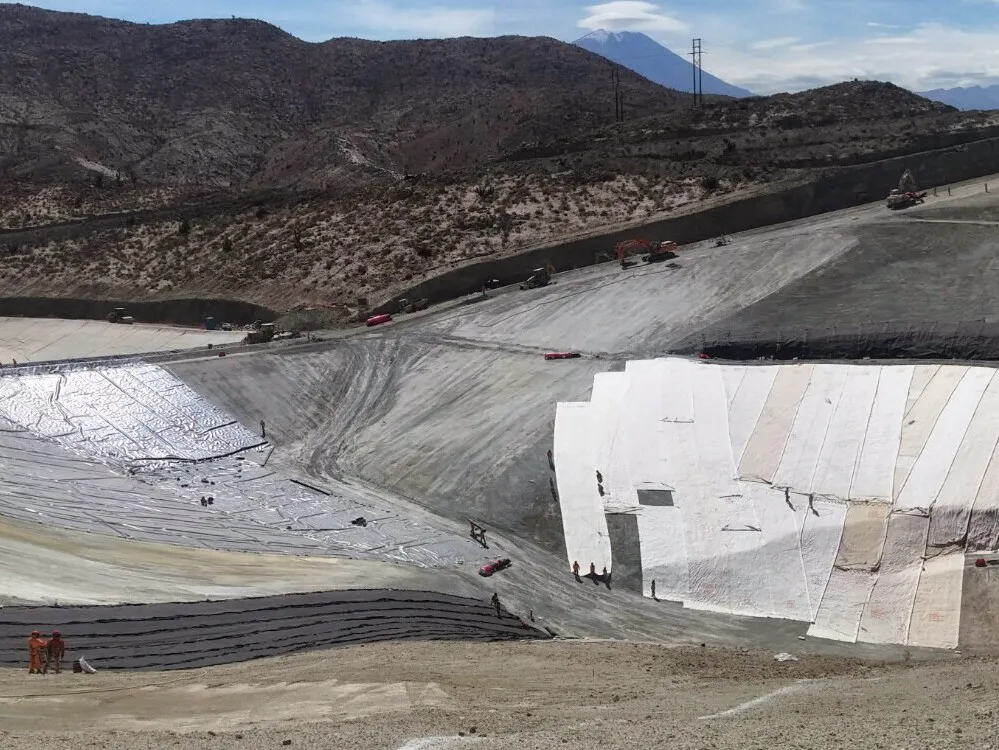
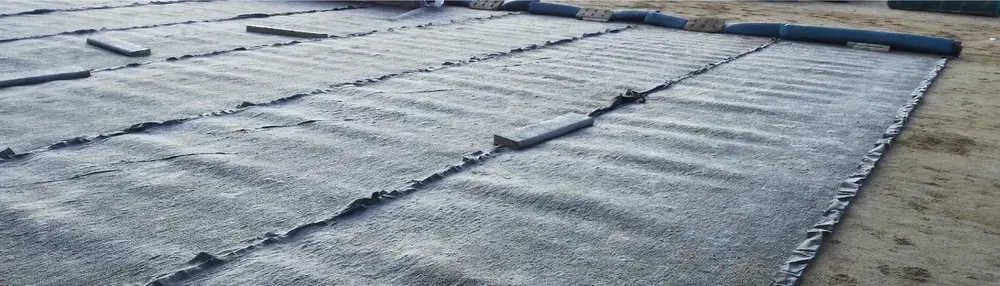
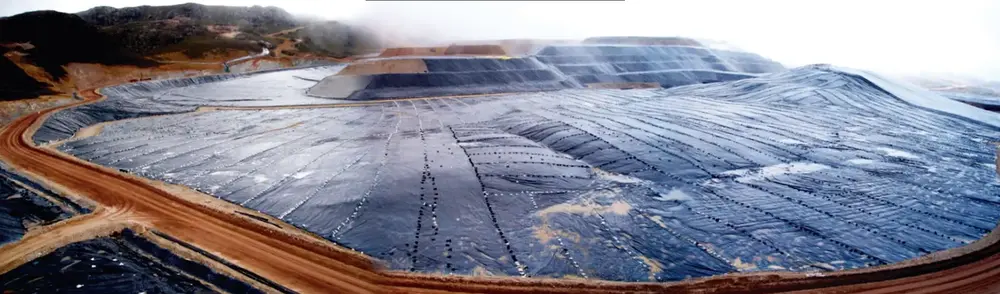
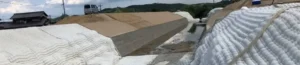
In one of the most representative closure processes in high Andean regions, the Pierina mining unit, located in the Cordillera Negra (Áncash), interventions were carried out to ensure the physical, hydrological, and geochemical stability of its main components. To manage water during the leach pad closure, a channel lining solution of more than 80,000 m² was implemented, consisting of geocells and nonwoven geotextile, which allowed the channels to be lined and adapted to slopes with different gradients.
This solution reduced the volume of concrete compared to conventional solutions, as well as minimized the carbon footprint by avoiding the transport of inputs from quarries. In this way, the channel lining was achieved with high technical efficiency, environmental sustainability, and an implementation adapted to the challenges of the geographical environment.
At the Las Bambas mining unit, located in the Apurímac region, the T6 canal was built as part of the project’s key hydraulic infrastructure. This structure, over 3 meters high and with a base over 5 meters long, was designed to convey a flow of approximately 80 m³/s. Its construction used 100 mm deep geocells on the slopes, filled with shotcrete, and 150 mm deep geocells at the base, reinforced with ready-mix concrete, ensuring a structurally stable solution resistant to high flow.
The use of geocells allowed for faster and more efficient installation than traditional solutions, while also offering flexibility to adapt to the terrain’s topography. This solution not only facilitates hydraulic control and flow containment, but also allows, in other applications, for the development of vegetation within the cells, promoting more sustainable and greener environments.
In one of the most representative closure processes in high Andean regions, the Pierina mining unit, located in the Cordillera Negra (Áncash), interventions were carried out to ensure the physical, hydrological, and geochemical stability of its main components. To manage water during the leach pad closure, a channel lining solution of more than 80,000 m² was implemented, consisting of geocells and nonwoven geotextile, which allowed the channels to be lined and adapted to slopes with different gradients.
This solution reduced the volume of concrete compared to conventional solutions, as well as minimized the carbon footprint by avoiding the transport of inputs from quarries. In this way, the channel lining was achieved with high technical efficiency, environmental sustainability, and an implementation adapted to the challenges of the geographical environment.
Our team of experts is ready to advise you and help you find the best option for your project.